In the app
Racing
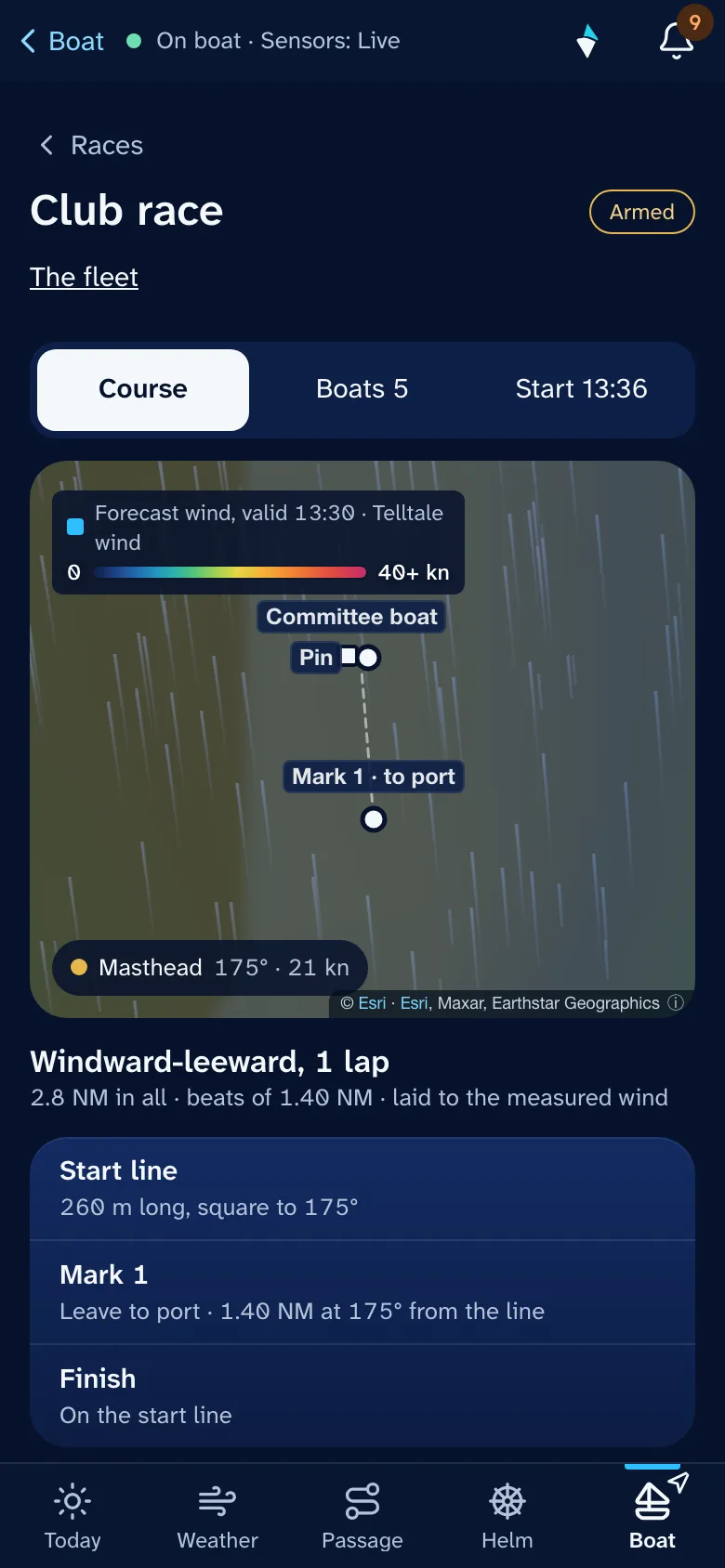
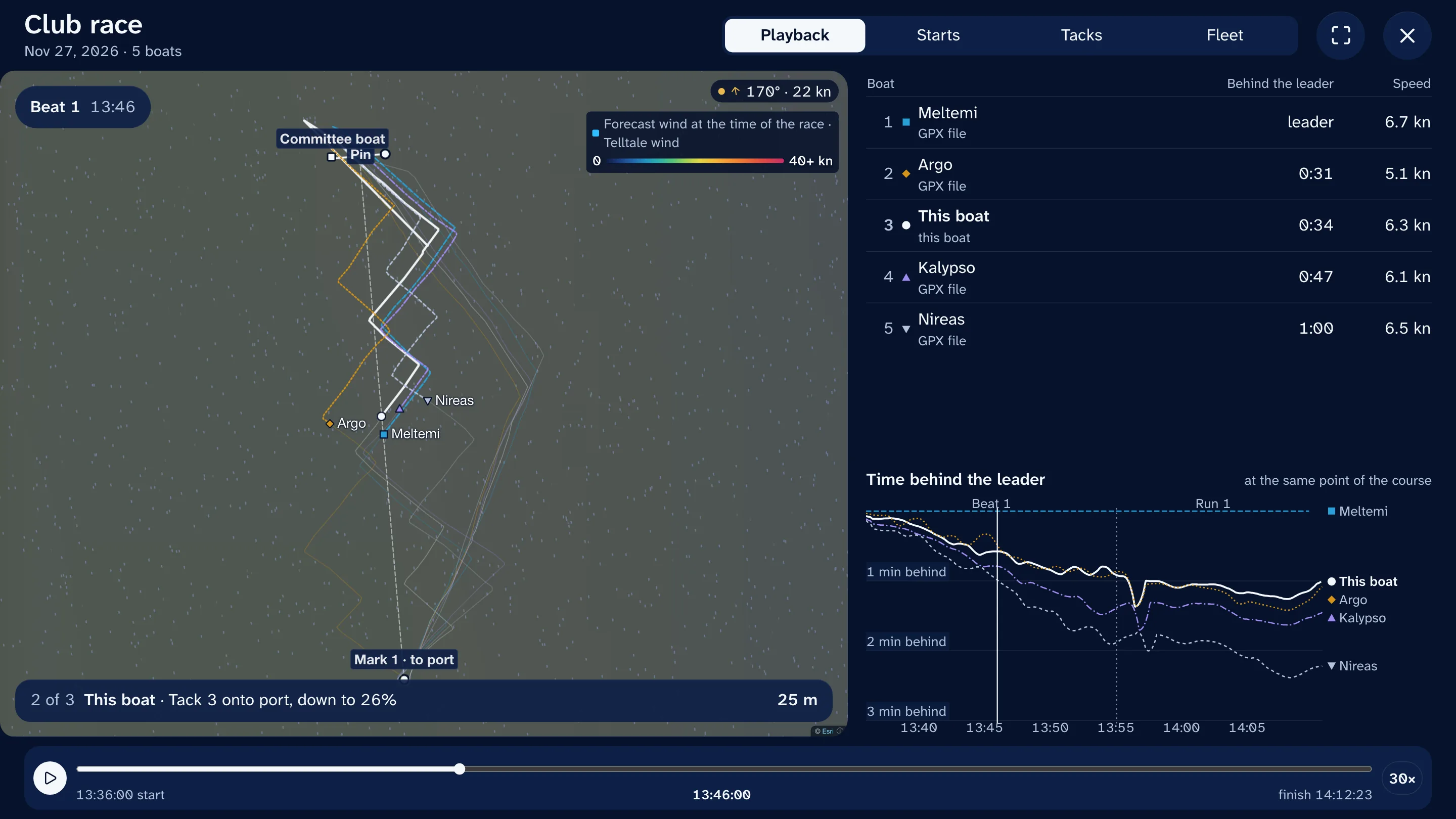
Set a course, time the start, and afterwards see how the boat sailed: tack by tack and leg by leg. After the race, the fleet: every boat whose track you add, compared leg by leg and played back on the course. The figures below replay a simulated race of five boats on a windward-leeward course.
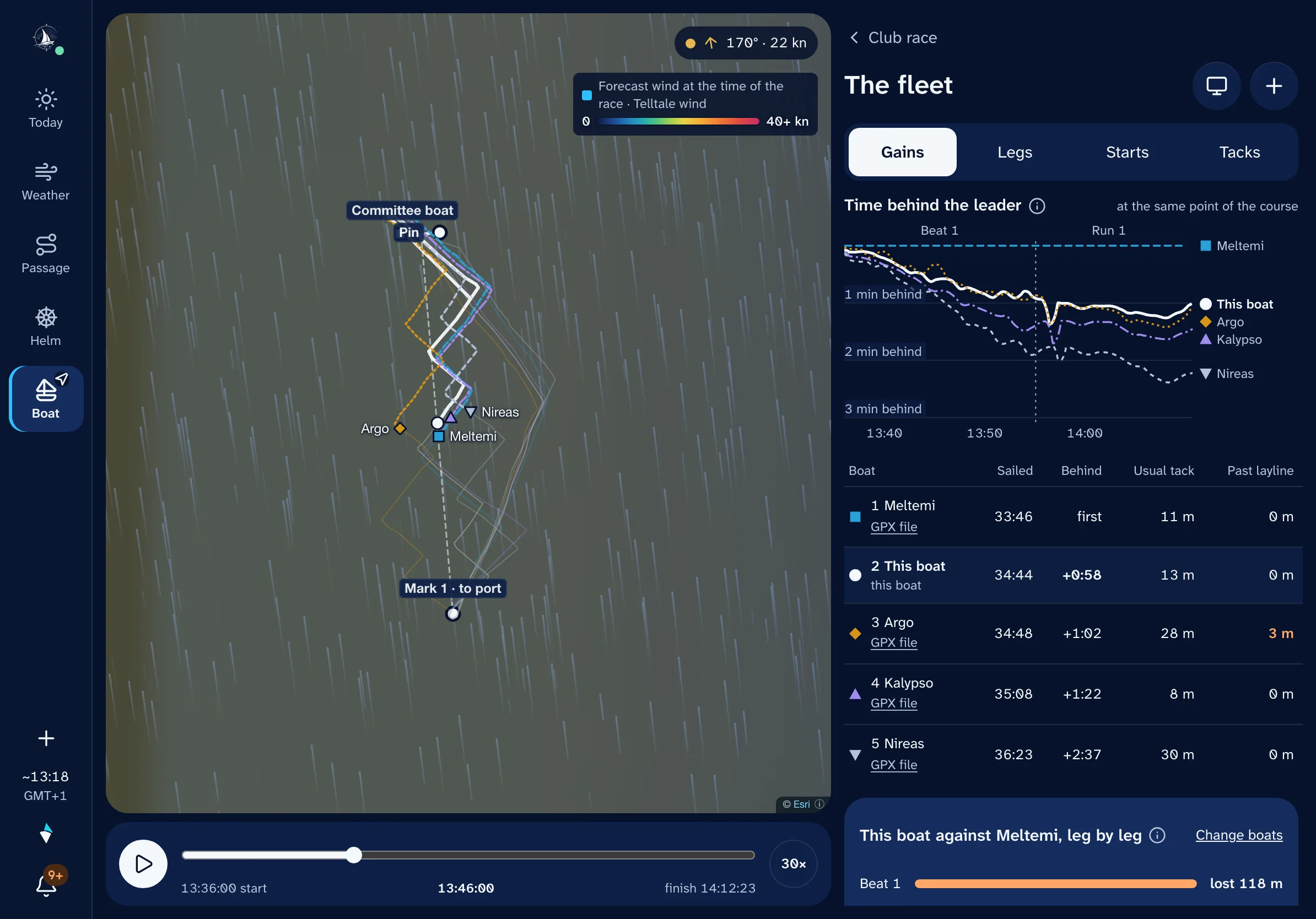
The whole fleet on one chart, played back
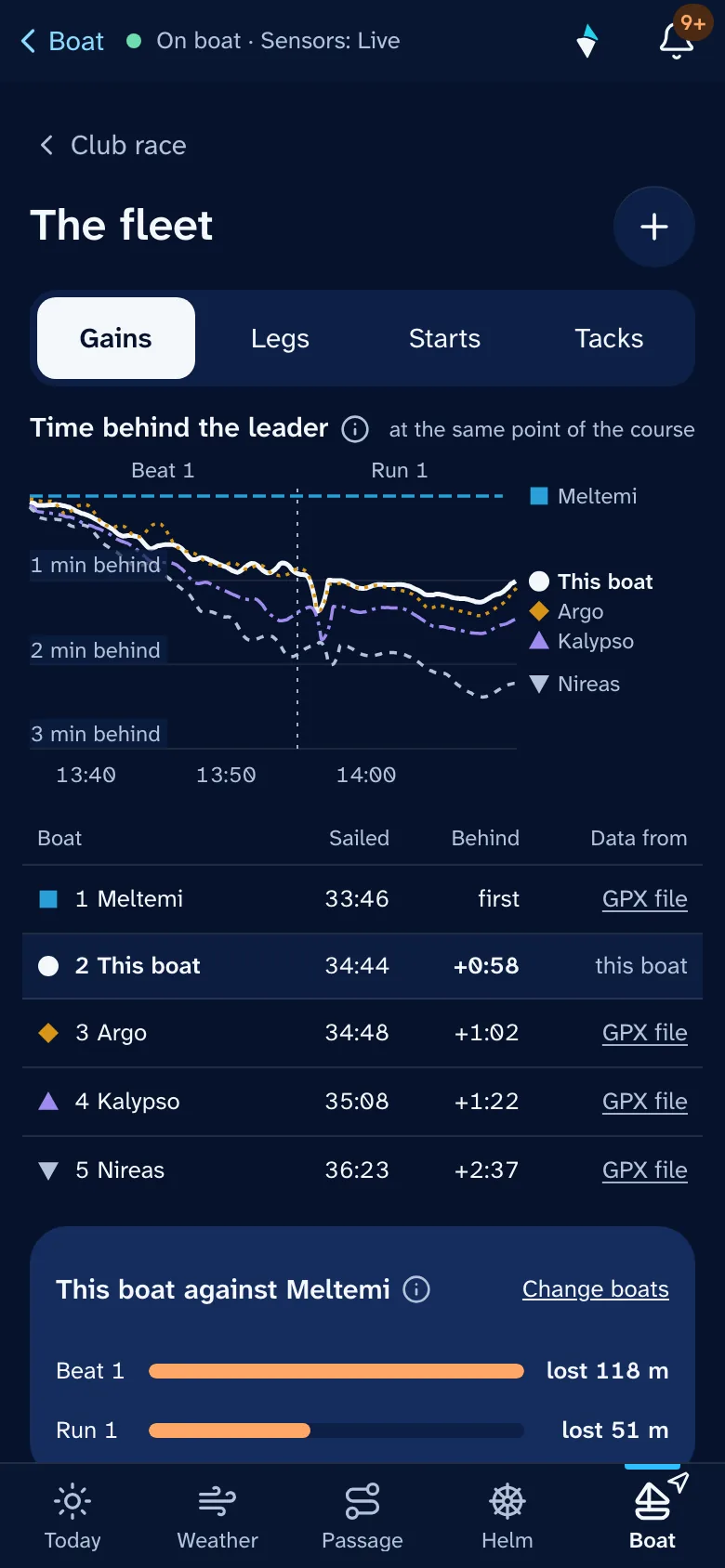
Every boat's track is drawn as the race runs. The list beside the chart is in race order and shows how far behind the leader each boat is, as time: how long ago the first boat was at the same point of the course. Distance behind bunches up at every mark. Time behind does not.
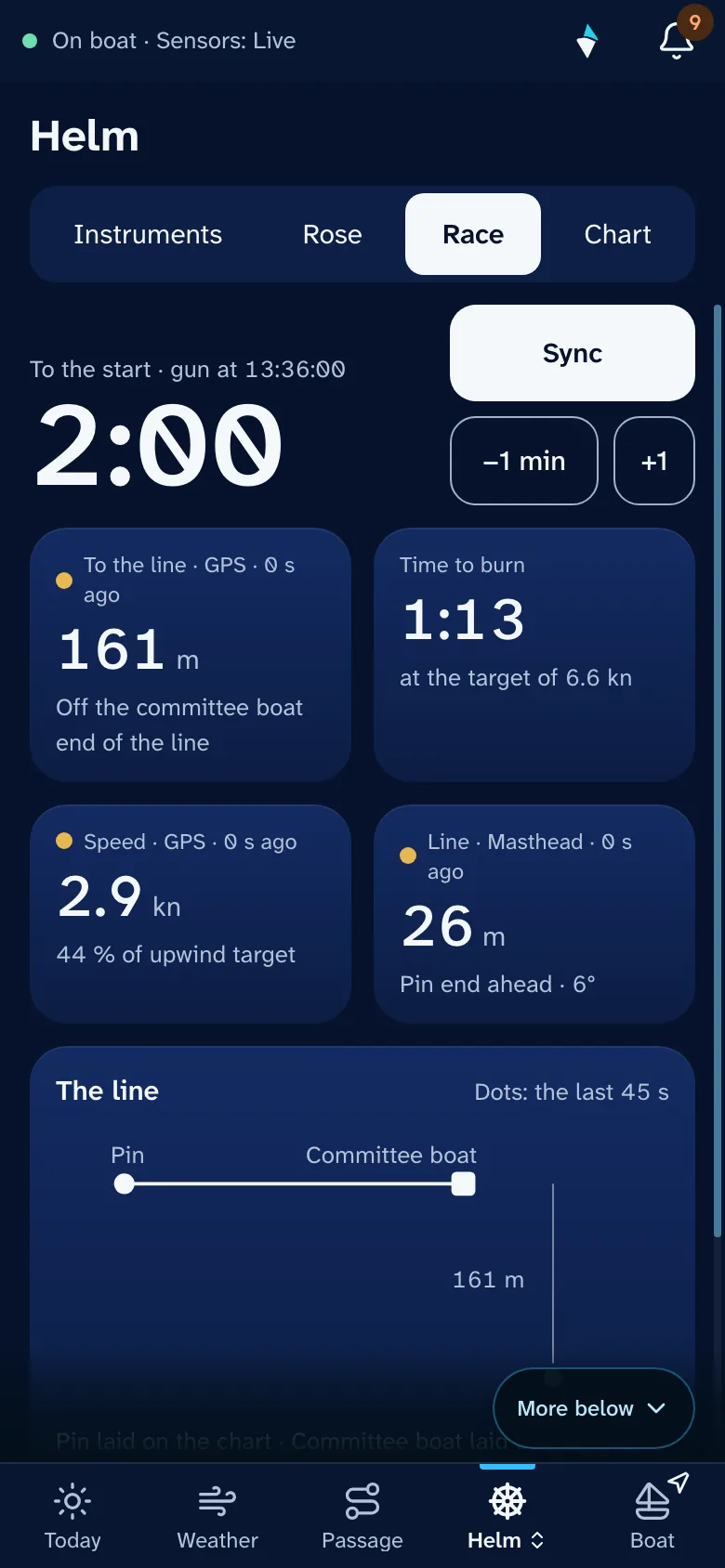
During the race
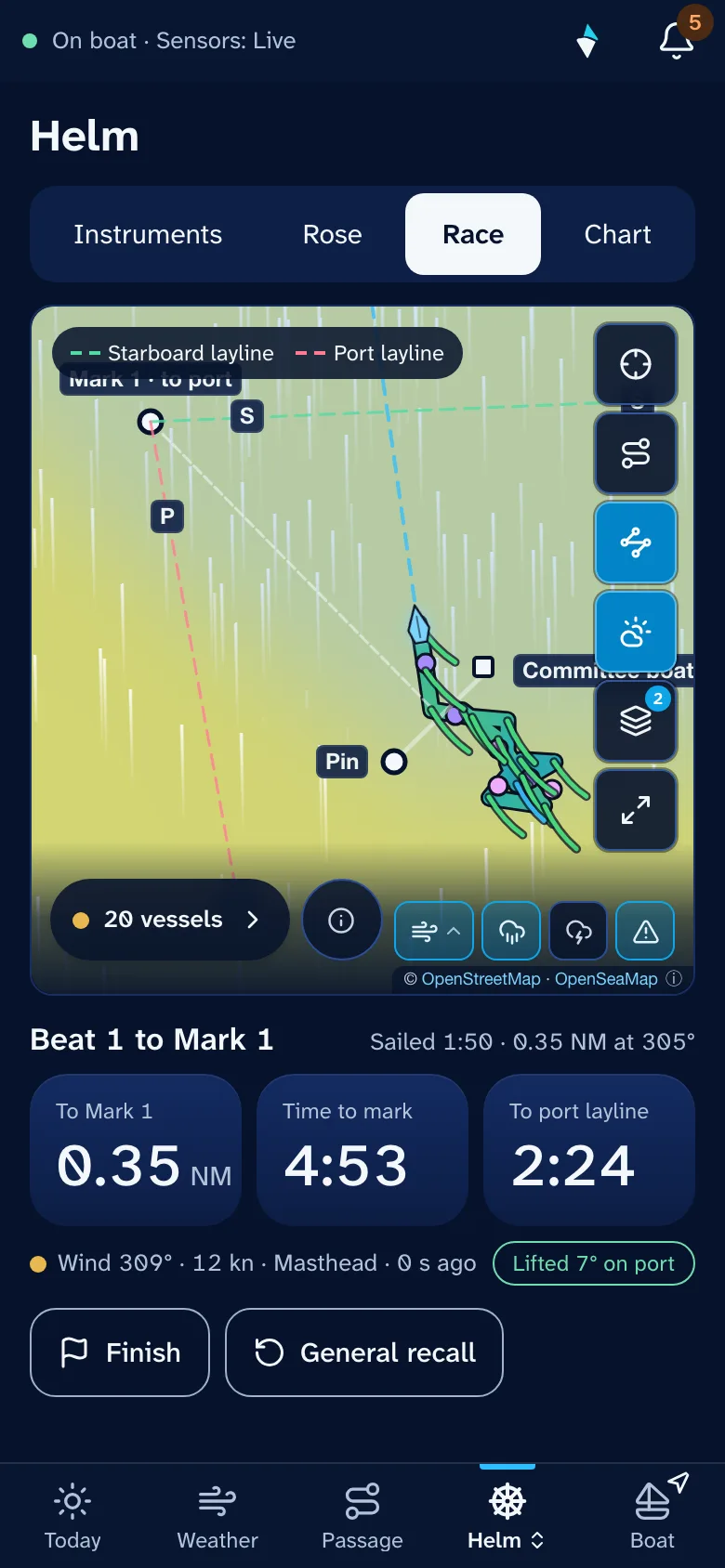
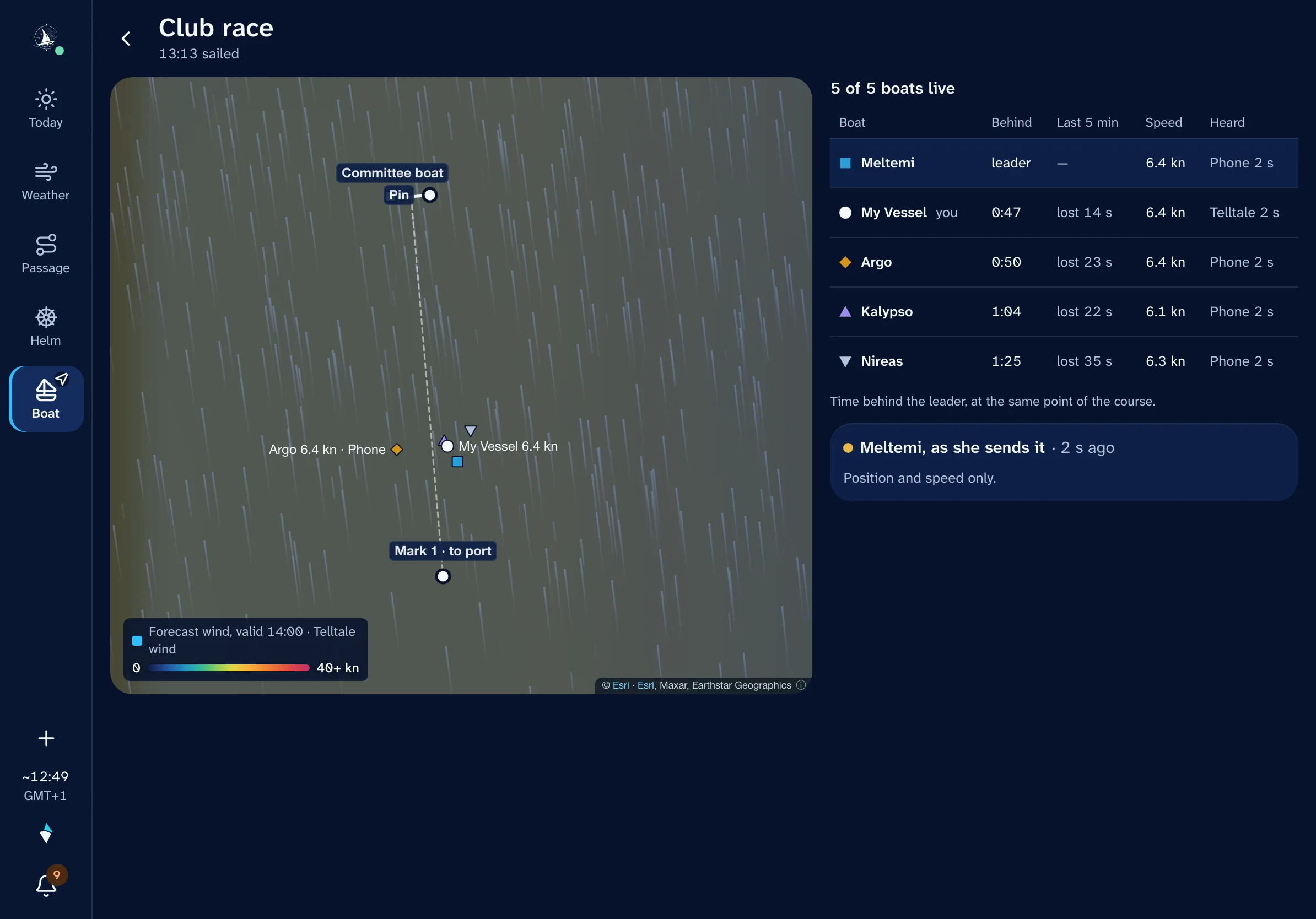
The Helm has a Race view: the countdown and the line before the start, then the next mark, the laylines and the vessels around you by AIS. The whole fleet can be followed live, from the boat or a coach boat: boats with Telltale join with the race's code, and a boat without the app sends her position from a phone through a link.
Afterwards
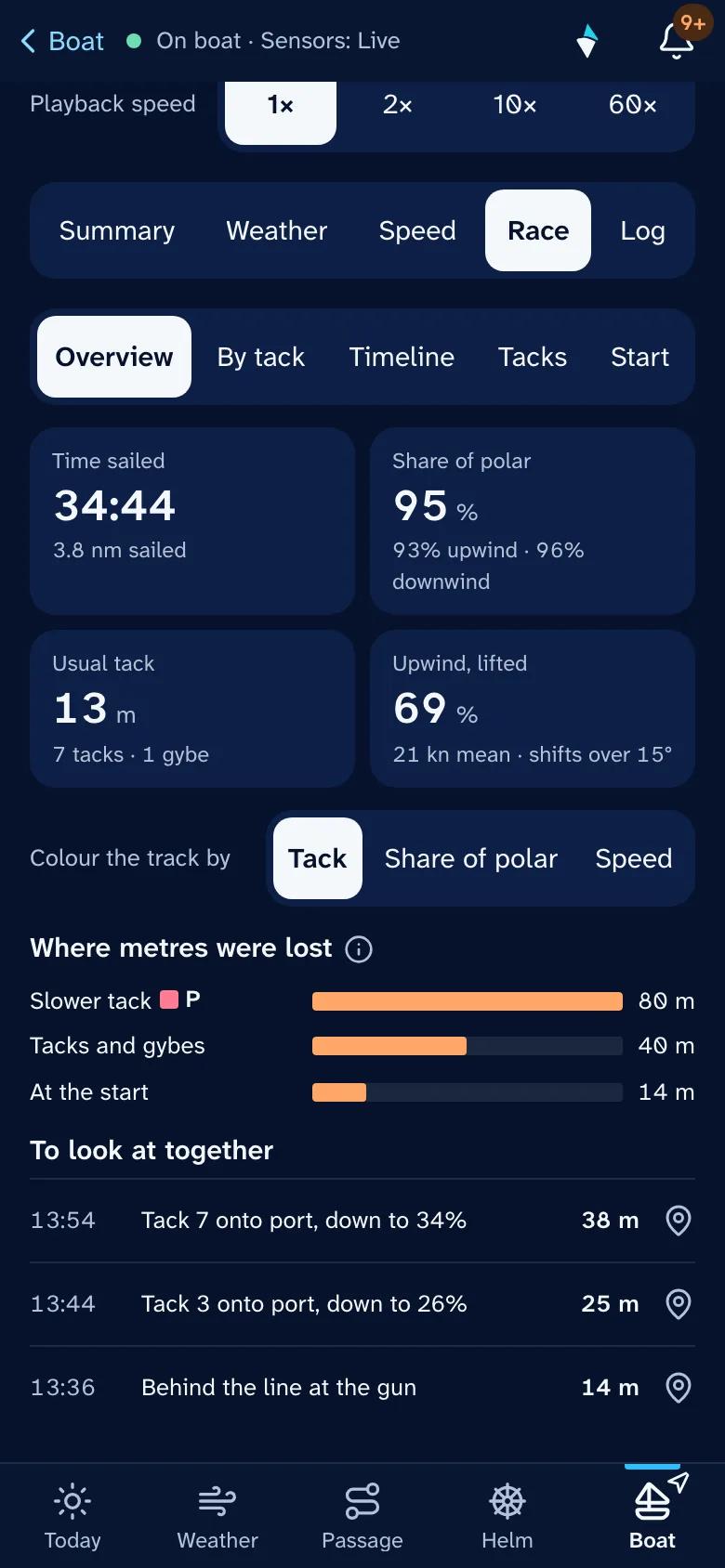
The race is kept in the Logbook with a Race section of its own. The fleet page sets the boats side by side: time behind the leader, the legs, the starts and the tacks, and any two boats leg by leg.
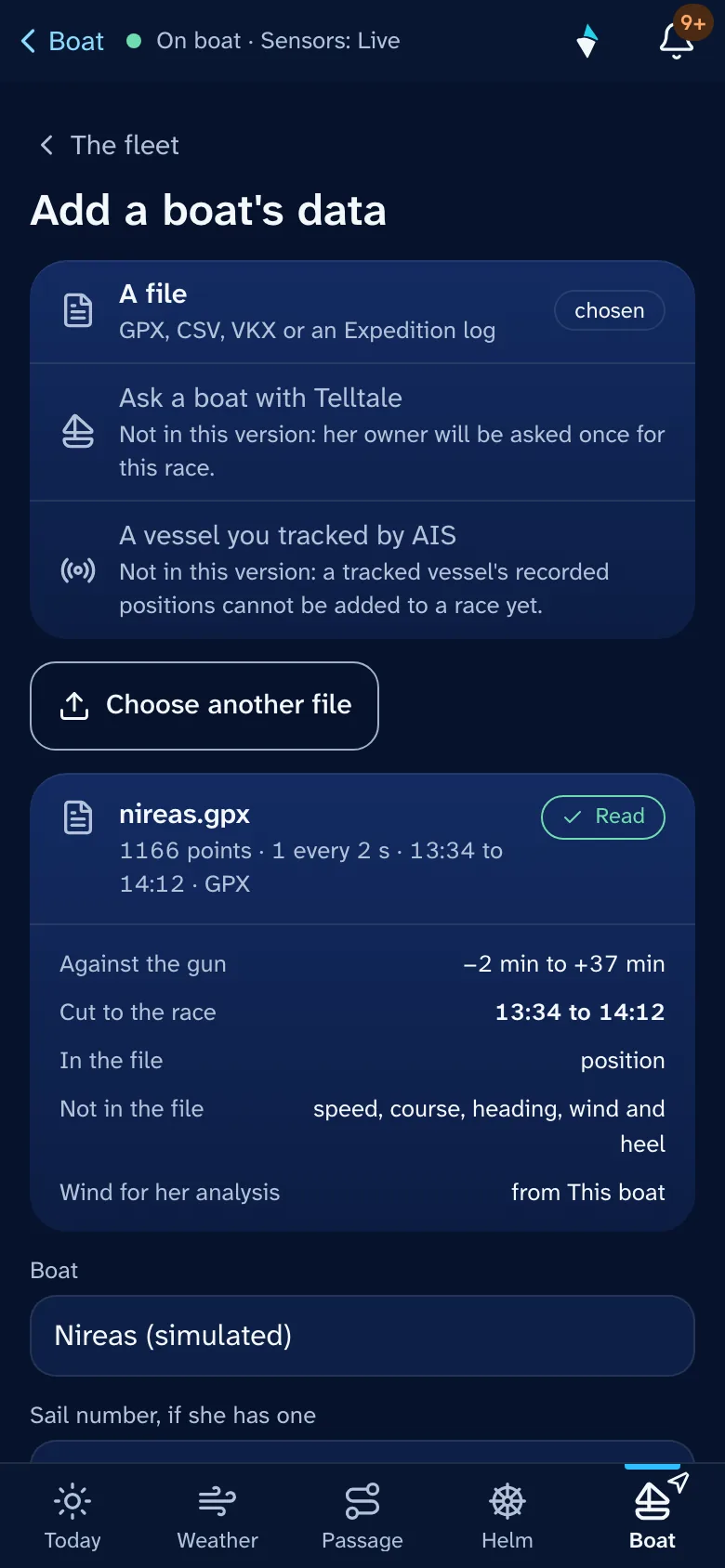
Any boat with a track file
A GPX, CSV, Vakaros VKX or Expedition file sent after the race adds a boat. Each boat's row says where her data comes from. Boats with Telltale, phones and vessels followed by AIS can be in the race too.
A simulated race. The wind is a real forecast for 23 November 2026 east of Ithaca: 13 kn from 268°.
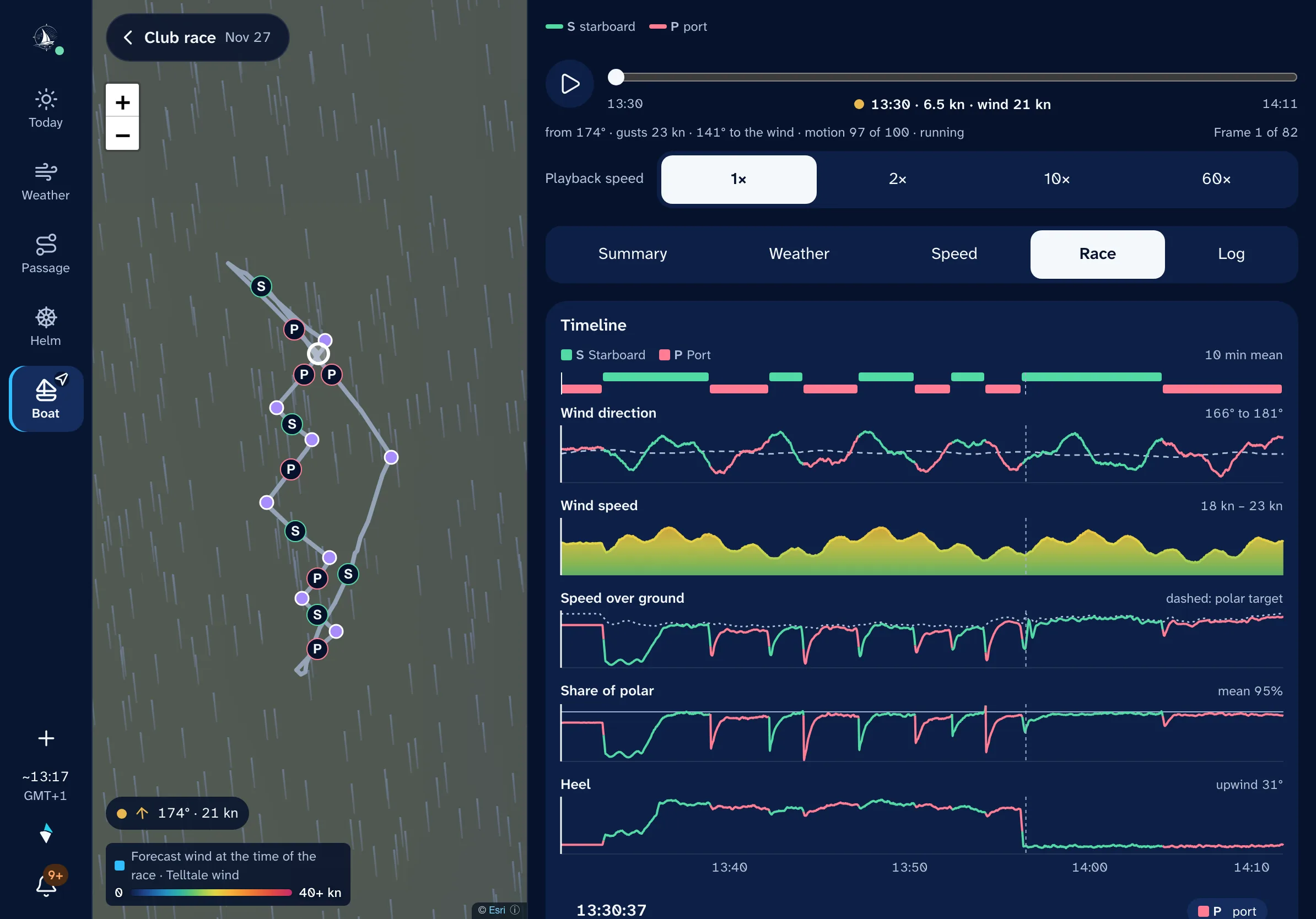
How she sailed, tack by tack
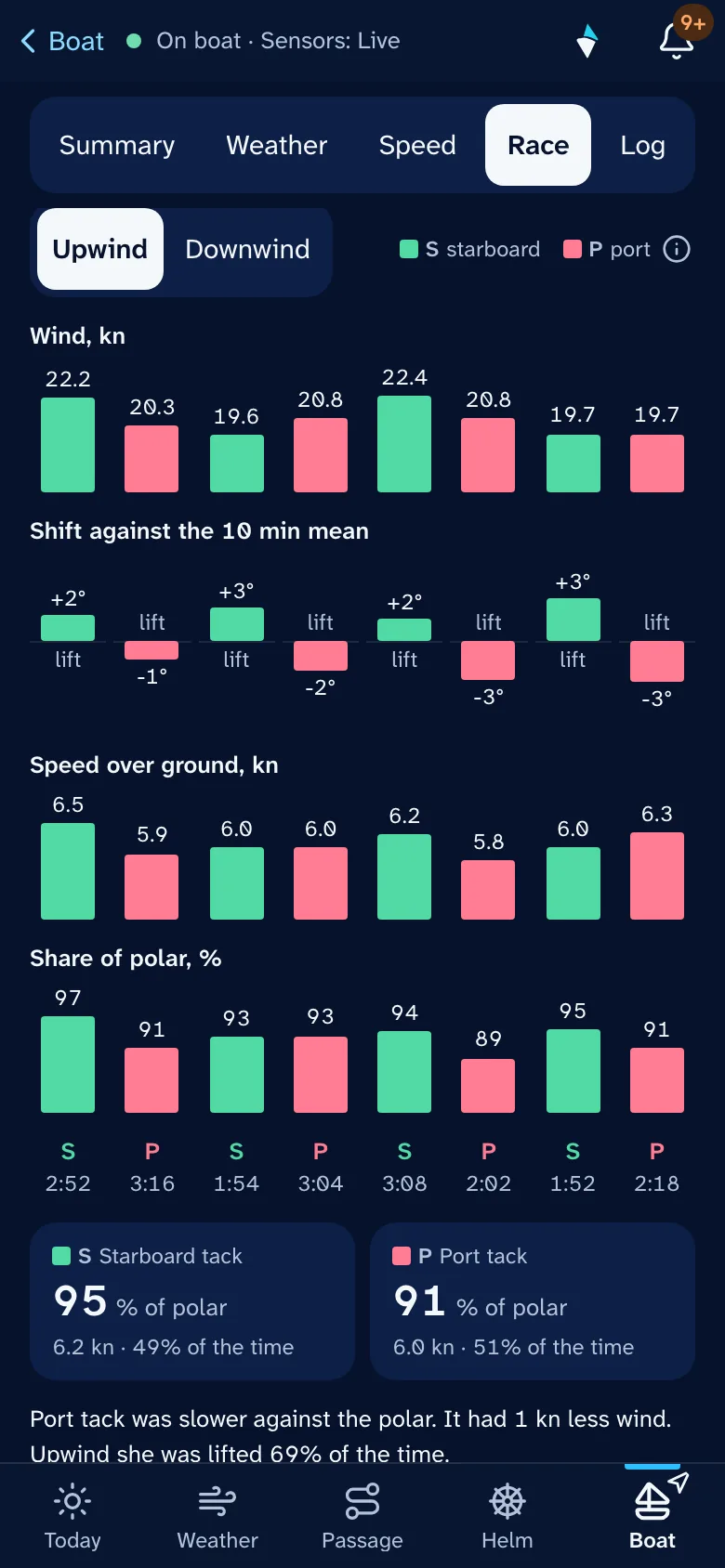
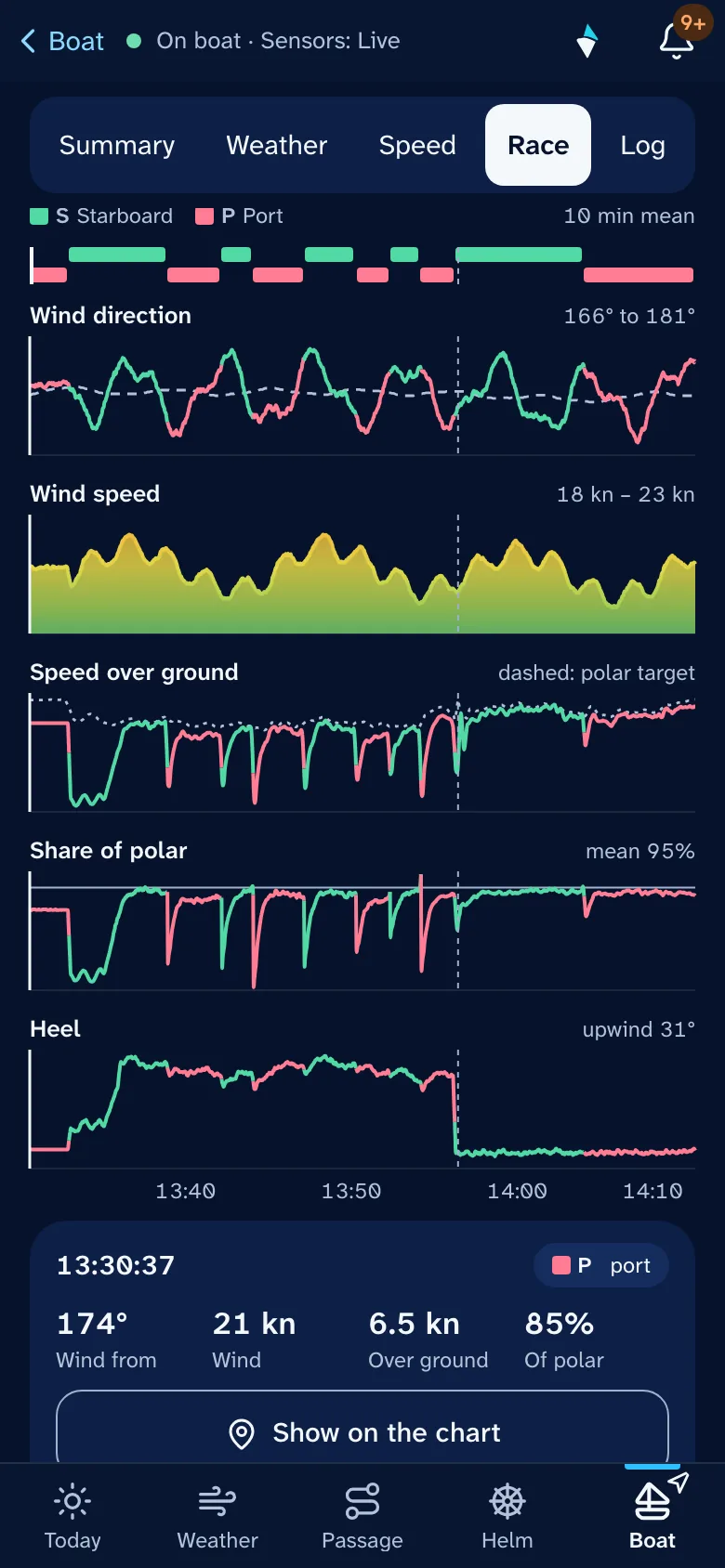
Wind direction, boat speed and share of polar through the race, coloured by the tack she was on. A boat that is slower on one tack than the other shows at once, and so does a beat sailed on the headed tack.
Share of polar
Her speed against the speed her polar gives for that wind and angle, on port and on starboard, upwind and down.
Lifted or headed
The wind direction against its ten minute mean, and the share of each beat spent on the lifted tack.
Past the layline
How far she sailed beyond the layline before her last tack to each windward mark.
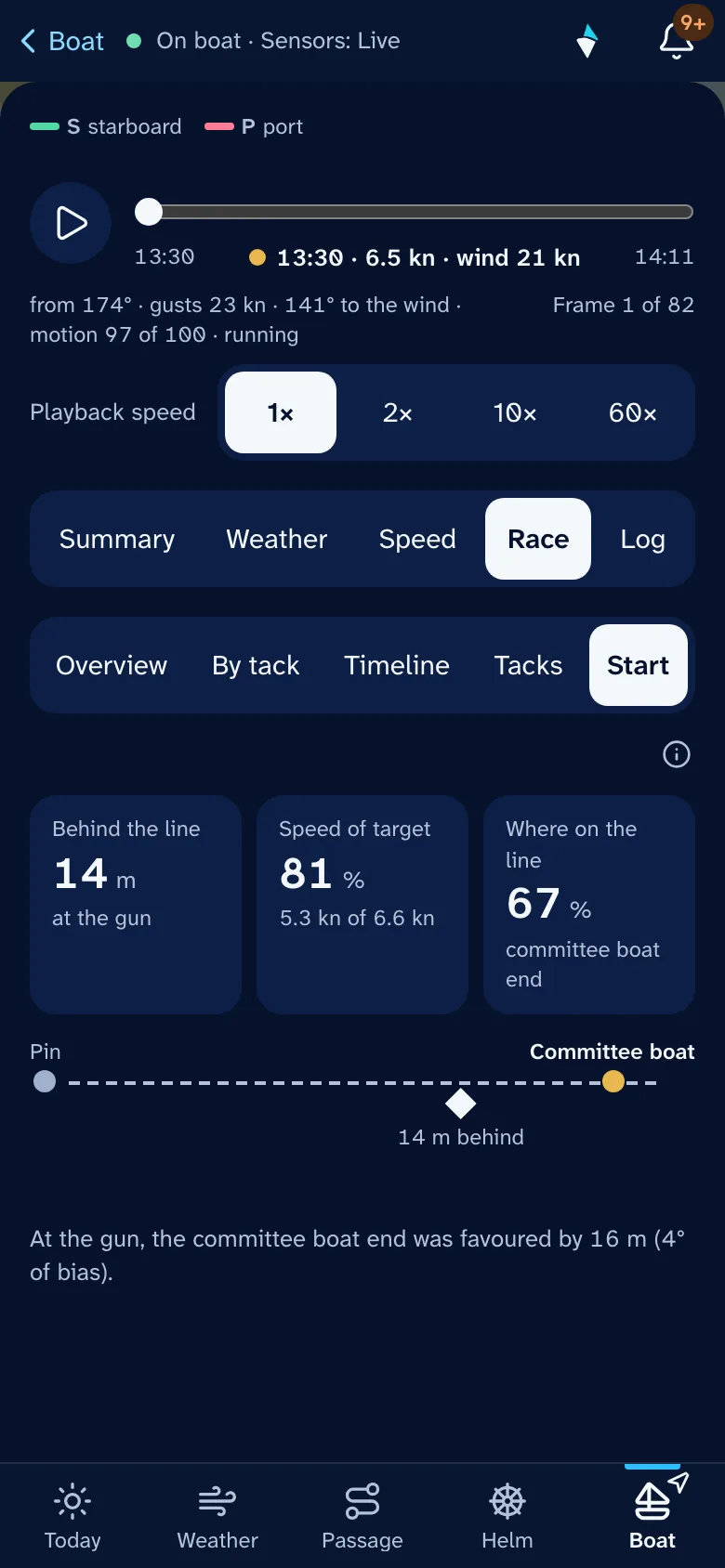
The start
Distance behind the line at the gun, speed against target, and where on the line she crossed.
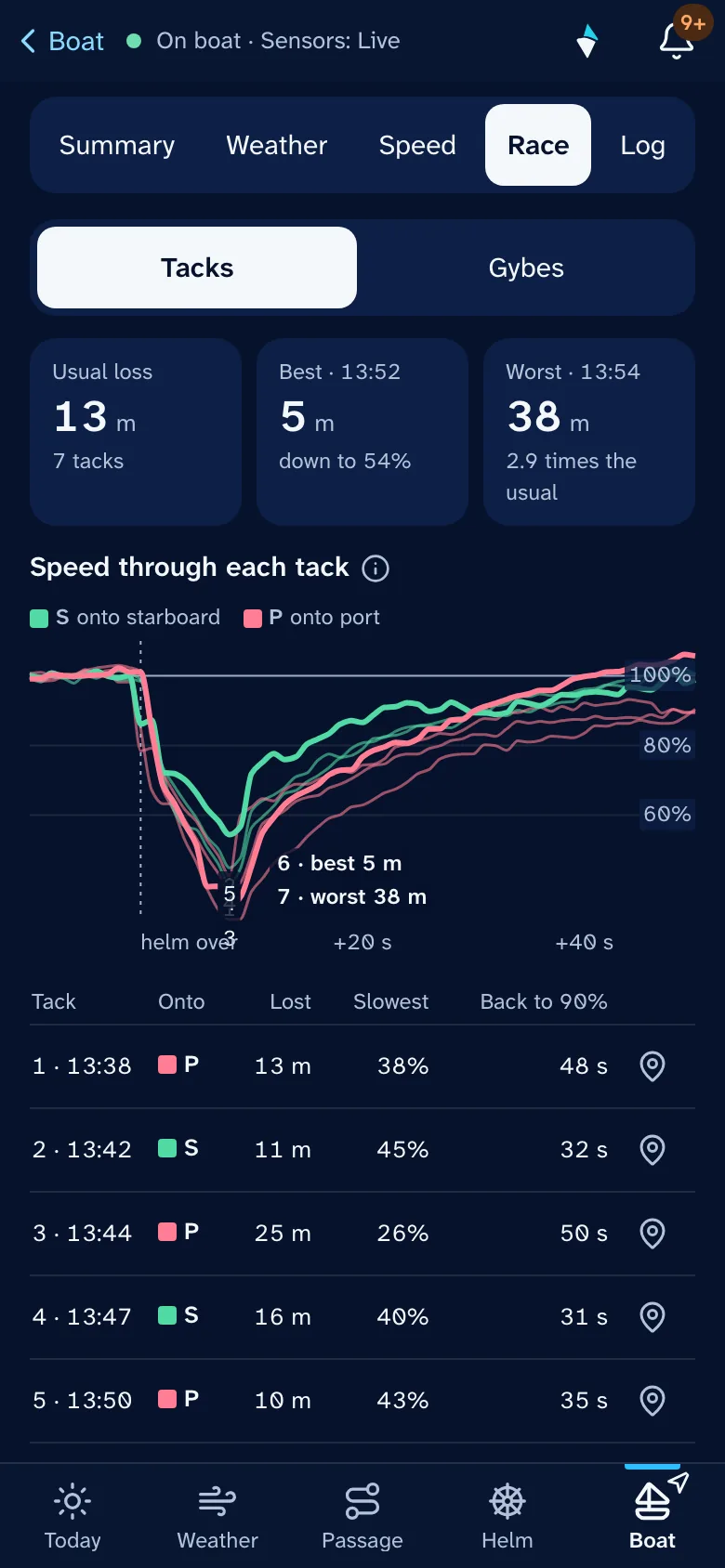
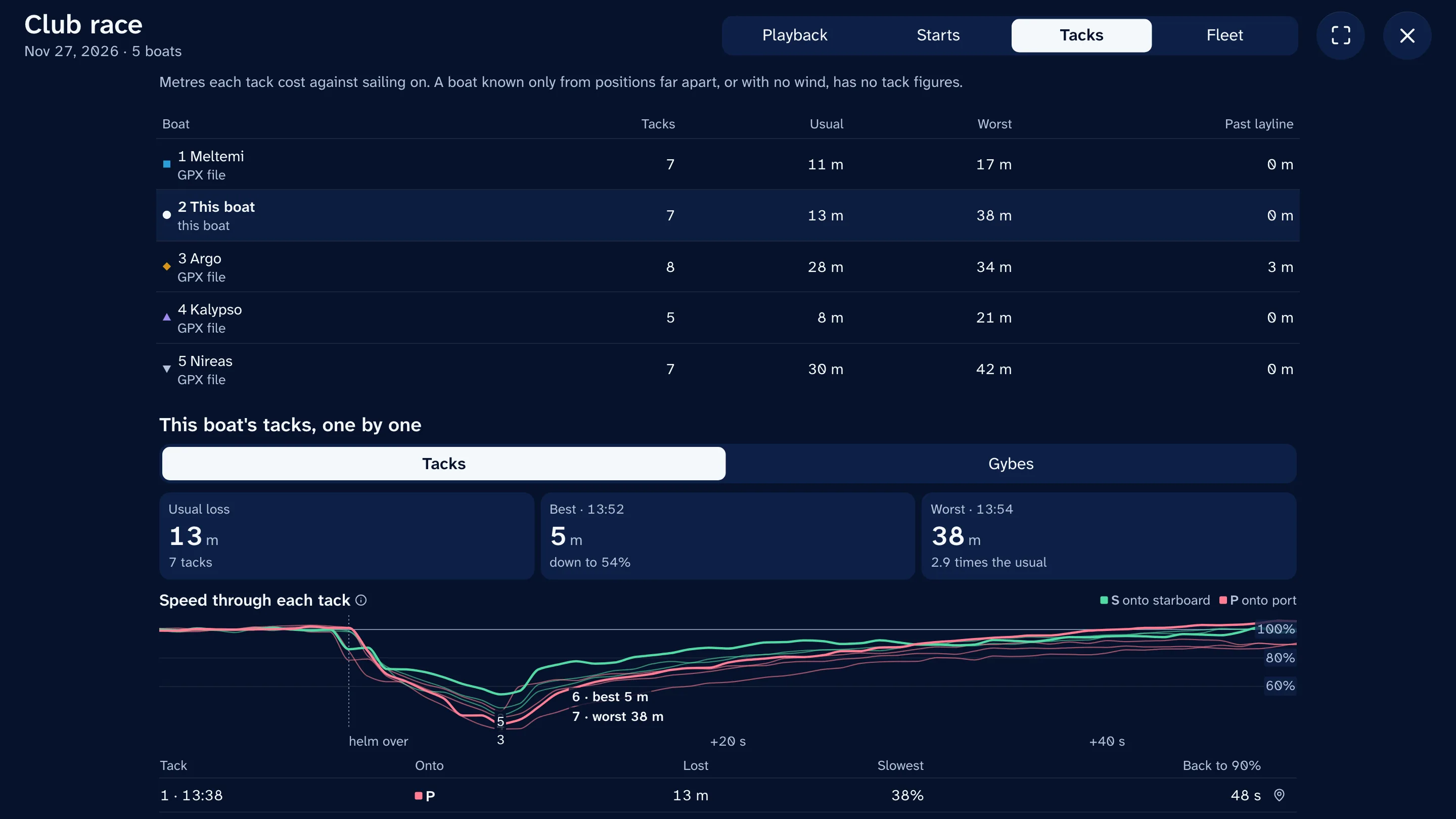
Every tack measured, against her own usual
Each tack is measured in metres: the distance made good through it against carrying on at the steady rate before and after. The figure is given beside her own usual, best and worst, which is a fairer test for a crew than a polar alone. Gybes are measured the same way.
The tacks from the simulated race. In the app, each tack in the list can be shown on the chart.
On the phone, the tablet and a large screen
A race in the app, from the course to the debrief and the fleet. Port is rose and starboard is green on every chart, and each also carries a letter or a label, so the colour is never the only sign.
About these pictures
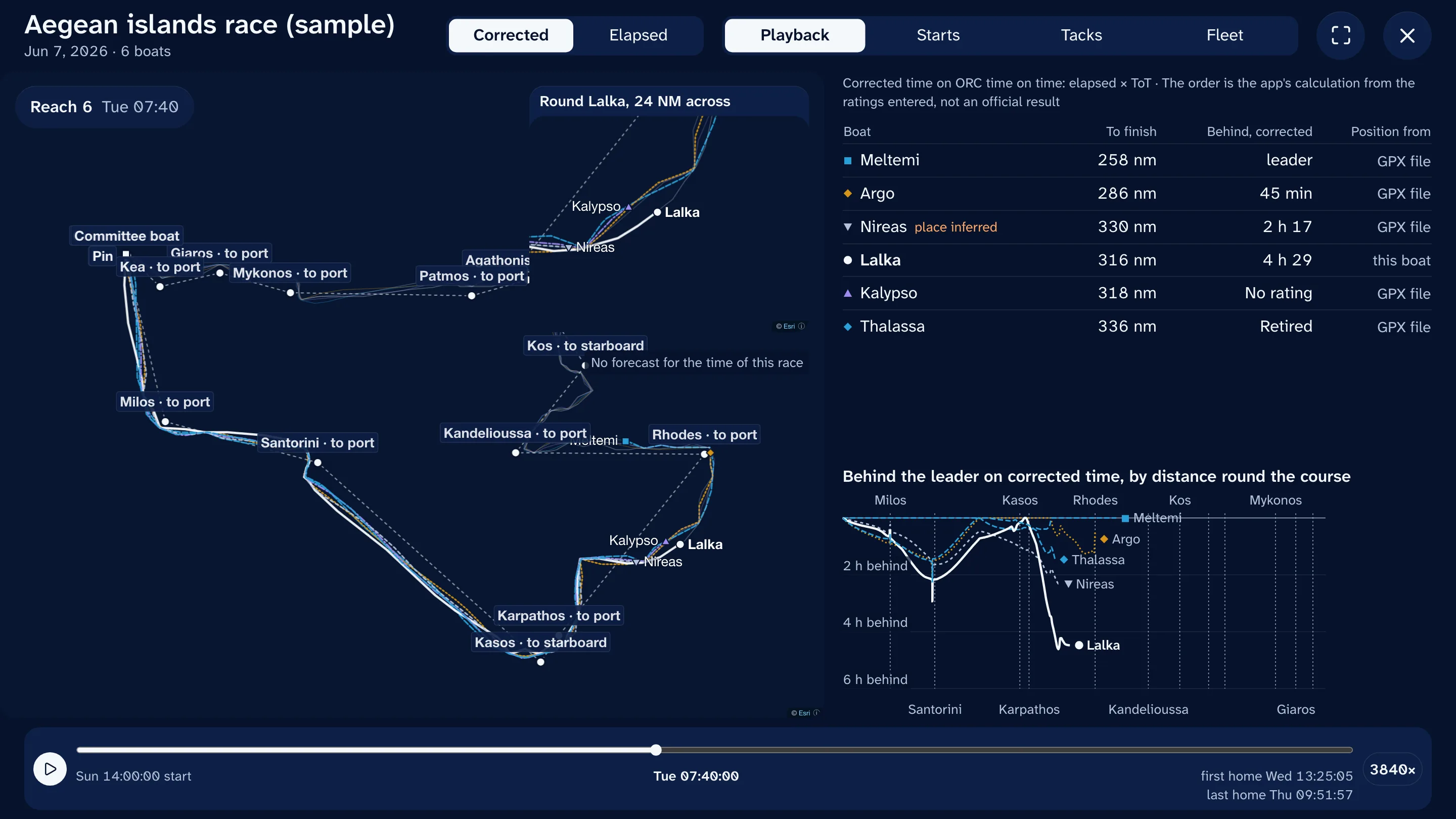
Every picture is a capture of the app, taken on 27 November 2026 on a demo boat with simulated instruments and AIS. She sails a simulated one-lap race east of Ithaca, with beats of 1.4 miles, in that day's real forecast, a southerly of about 21 knots, which the race maps draw under the tracks. The other four boats are simulated too: during the race each sent her position through a phone tracker link, and afterwards her track was added as a GPX file. The Race view on the first beat and the three pictures of vessels are from earlier simulated sails the same day. The offshore race is sample data: invented boats and ratings on a course laid approximately round the Aegean islands, loaded into the app and played back. It holds no data from any race.
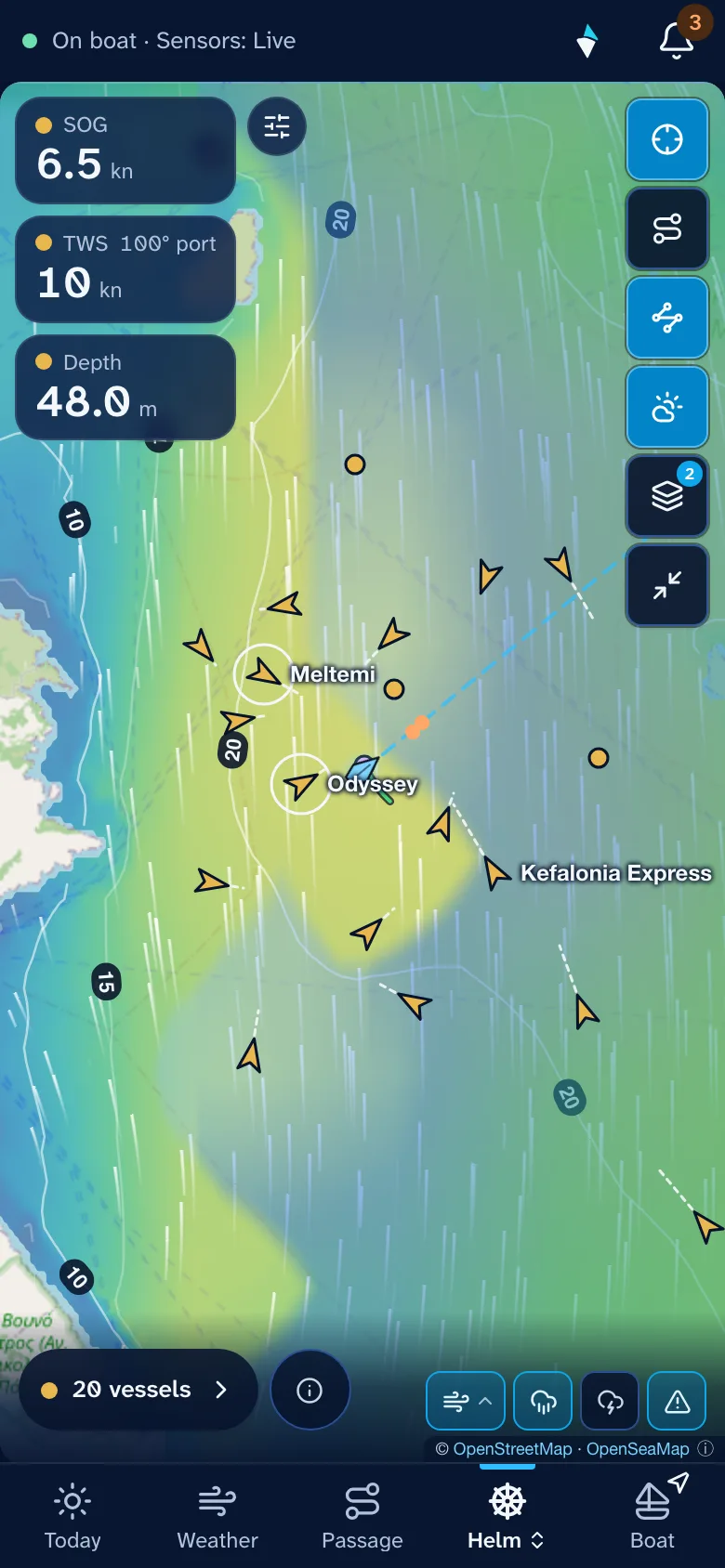
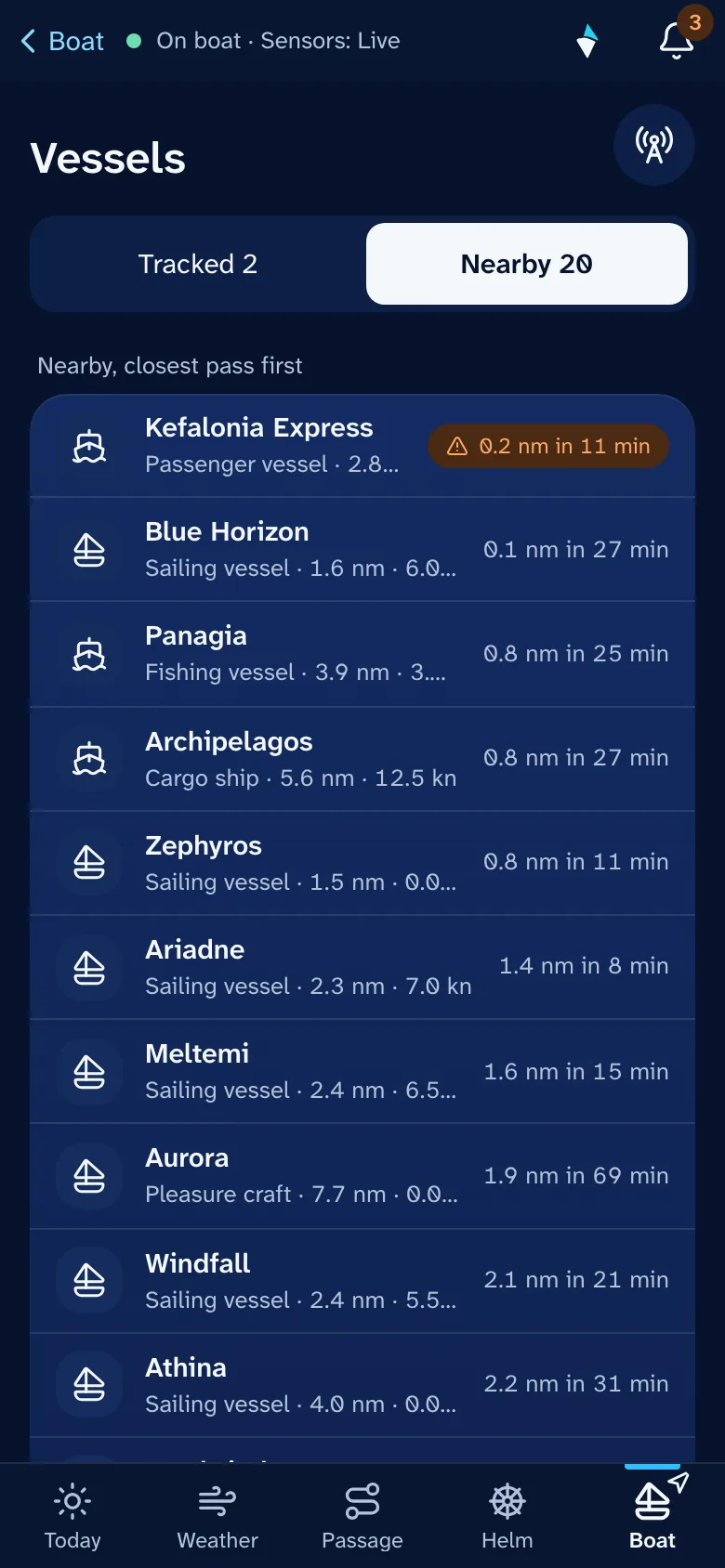
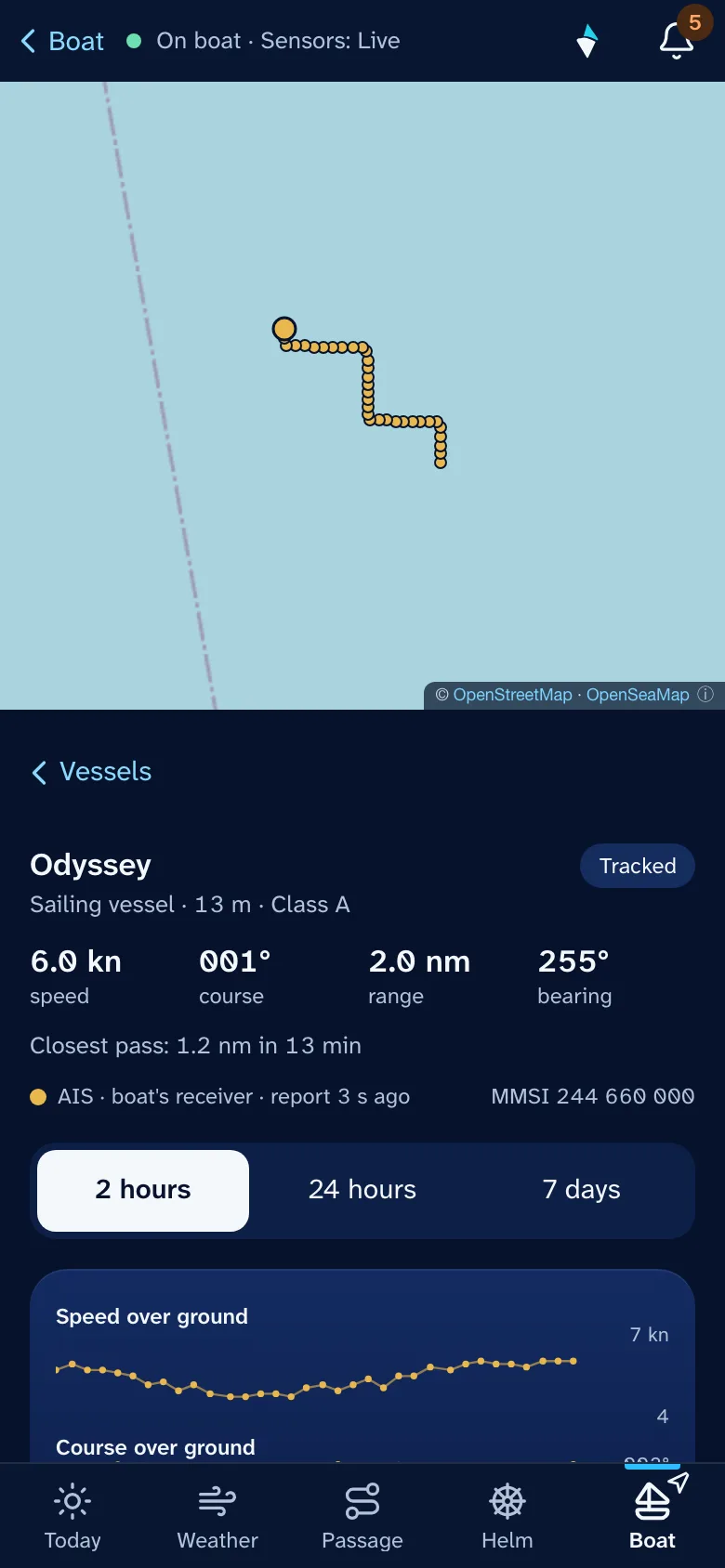
Vessels around you, and the ones you choose to follow
Telltale reads AIS from the boat's instruments or over the network, in every plan. Choose a vessel to track and her movements, speed and course are recorded, for a flotilla or for a race. Vessels you have not chosen are never recorded.
Where a boat's data comes from, and what it allows
How much can be said about a boat depends on how often her position is known and whether her wind is measured. Telltale says which data it has for each boat, and leaves a figure out when the data cannot support it: a boat known only from positions far apart gets legs and gaps, but no start or tacks.
| Source | Position | Wind, heading, heel | Live | Good for | In the app |
|---|---|---|---|---|---|
| Your boat's instruments | Once a second | All | Yes | Everything on this page | Now |
| Another boat with Telltale, joined by race code | Every few seconds | If she shares them | Yes | Her place, speed and time behind during the race | Now |
| A phone carried aboard, through a tracker link | From the phone's GPS | None | Yes | Her place, speed and time behind during the race | Now |
| AIS | Every 30 seconds for most yachts | None | Yes | Her place and time behind during the race | Now |
| A track file afterwards | As it was logged | If it was logged | No | Whatever the file holds | Now |
Sharing is off until you join
A boat is shared only into a race she joins, and only with the boats and coaches in it, until she leaves or the race's time is over, a day after the finish. Her wind and heel go too only if she chooses. Leaving deletes what she sent.
Plans
Vessels from AIS and tracked vessels are in every plan. Race analysis and the fleet are in the Sailing plan. On a Bosun, everything is included.
Corrected time
A race scored on handicap, by IRC, ORC time on time or time on distance, or PHRF time on distance, puts the fleet in order on corrected time from the ratings entered, with elapsed time a switch away. The order is the app's calculation from those ratings, not an official result. ORC's performance curve scoring is not covered.